
Guide
Drug Trafficking: Where are the Illegal Opioids Coming From?
Joint Commission accredited · In network with most major insurance · Admissions answered 24 hours a day
Published October 9, 2018
Reviewed and updated July 29, 2026
America’s opioid crisis has recently intensified with an increase of deadly synthetic opioids like fentanyl being smuggled into the country. While some of these opioids are being manufactured in criminal clandestine laboratories in the U.S., much of the illegal opioids contributing to the drug crisis in America are shipped in from other countries.
Briarwood Detox Center’s opiate detox program provides medically supervised, evidence-based care.
Table of contents
- Commonly Abused Opioid Drugs in America
- Dangers of Synthetic Opioids
- Where are the Opioids Coming From?
- Internet Drug Trafficking is Increasing
- Illegal Opioids are Also Being Trafficked by Mail
- Opioid Drug Trafficking Statistics
- Reducing the Trafficking of Illegal Opioids into the U.S.
- Opioid Addiction: The Effects of Criminal Drug Trafficking are Far-Reaching
Commonly Abused Opioid Drugs in America
Drug overdose death rates in America have soared over the past few years, with 2017 estimates revealing an all-time high of 72,000 overdose deaths (a 10 percent increase from 2016).1 Although synthetic opioids are a major factor in the drastic increase in U.S. drug overdose deaths over the past few years, there are a few other primary opioid drugs of abuse in America.
Does your insurance cover detox in Austin?
Find out in about 2 minutes — free, confidential, no obligation.
Verify Insurance- Prescription opioids: Oxycodone, hydrocodone, morphine, and methadone are all commonly abused prescription opioids in America. Although more than 50 percent of prescription opioid users get their painkillers from friends or relatives, with only 10 percent paying for them, many counterfeit prescription opioid pills are manufactured overseas and then shipped into the U.S.2
Many experts credit the blatant overprescribing of prescription opioids as a primary cause of the U.S. opioid crisis. Even as the government implements restrictions on opioid prescriptions, the rampant abuse of prescription drugs, especially opioids, continues to be a major problem in America.
- Heroin: Heroin has been a highly abused illegal opioid drug in America for decades and continues to be so. Today, heroin is a less-expensive alternative to prescription opioids, and many people who become addicted to prescription painkillers first, eventually transition into heroin abuse because it’s cheaper and easier to obtain.
- Synthetic opioids: Synthetic opioids like fentanyl is a serious threat to the health and well-being of drug abusers, as they can be 50 times more powerful than heroin. Although it can be used as a painkiller for medical purposes, illegally manufactured and dealt fentanyl is often combined with other substances,such as cocaine, which severely increases the user’s risk for overdose and death.
Dangers of Synthetic Opioids
According to the National Institute on Drug Abuse (NIDA), in 2016, synthetic opioids like fentanyl surpassed prescription opioids as the most common drugs involved in opioid deaths in the U.S. Synthetic opioids were involved in 50 percent of all opioid-related deaths, which is up 14 percent since 2010.3 Heroin was the third leading cause of drug overdose deaths.
Unlike heroin or other commonly abused drugs, synthetic opioids (particularly fentanyl) carry some additional risks and dangers. For one, drug users can’t possibly know how potent a batch of fentanyl will be, as there are no restrictions or production standards that regulate the illicit manufacturing of the drug.
Drug users may also unknowingly ingest fentanyl while using another drug like cocaine, heroin, or counterfeit prescription pills, as dealers and manufacturers often lace other drugs with dangerous amounts of fentanyl.
To add to the existing dangerous associated with synthetic opioids, many fentanyl analogs such as W-18, U-47700, and AH-7921 are often used to cut heroin or other drugs, yet their long and short-term physical effects are widely unknown.4
The medication naloxone has been touted as a life-saving drug that can reverse opioid overdoses by blocking the effects of opioids on the brain and restoring respiration. However, it is by no means a failsafe option and it is not guaranteed to work every time.
Where are the Opioids Coming From?
- Mexico: Even though most of the world’s heroin is produced in Afghanistan, most of the heroin used by American drug users comes from Mexico. In 2014, 79 percent of the heroin seized by the DEA was Mexican white powder.5 According to the Council on Foreign Relations, most of the heroin that is smuggled into the United States is grown on poppy farms in Mexico. Once produced, the drugs are then produced by eight main cartels and distributed to highly-populated cities in America, such as Houston, San Antonio, Chicago, and Los Angeles.6
- China: Another primary source of illegal opioids flowing into the U.S. is China. Officials have long known that illegal drug manufacturers in China have been huge producers of the counterfeit pills, heroin, and fentanyl that is sold and used by drug users here in the U.S.8,9 Many of these substances are shipped internationally via USPS, FedEx, and UPS, despite requirements regarding advanced data on the contents of packages transported through customs. Most of the fentanyl today is produced in China and transported to the U.S. through Mexico.
- HIDTA areas: The DEA has classified several different American cities as “High-Intensity Drug Trafficking Areas” (HIDTA), meaning the area is a primary center of illegal drug production, manufacturing, or distribution, and the drug-related activities in the area are significantly harmful to the local communities.7 America’s southwestern border, in particular, is a hotspot for the production and smuggling of illegal opioids into the county. This includes several different cities and counties in the states of Texas, Arizona, New Mexico, and California. According to the United States Sentencing Commission, the top five districts for drug trafficking offenders were the Western District of Texas, the Southern District of Texas, the District of Arizona, the Southern District of California, and the District of New Mexico.14
Internet Drug Trafficking is Increasing
As e-commerce booms, the sales of synthetic designer drugs (often containing fentanyl and fentanyl analogs) also increase. Many of these illegal substances are sold online and marketed as “plant food,” “research chemicals,” or “jewelry cleaner.”
Drug abusers find and purchase these illegal drugs by searching the web or using social media apps and websites like Instagram to connect with dealers. Drug abusers in the U.S. are increasingly turning to the internet for their drug abuse needs, as it is full of forums and websites that describe where you can buy them, which ones provide the best high and even details on how to use them.
Where we are
Detox centers across Texas
Three locations, each with its own admissions line and its own clinical team. Pick the one nearest you — or call and we will tell you which has a bed tonight.
-
 Inpatient
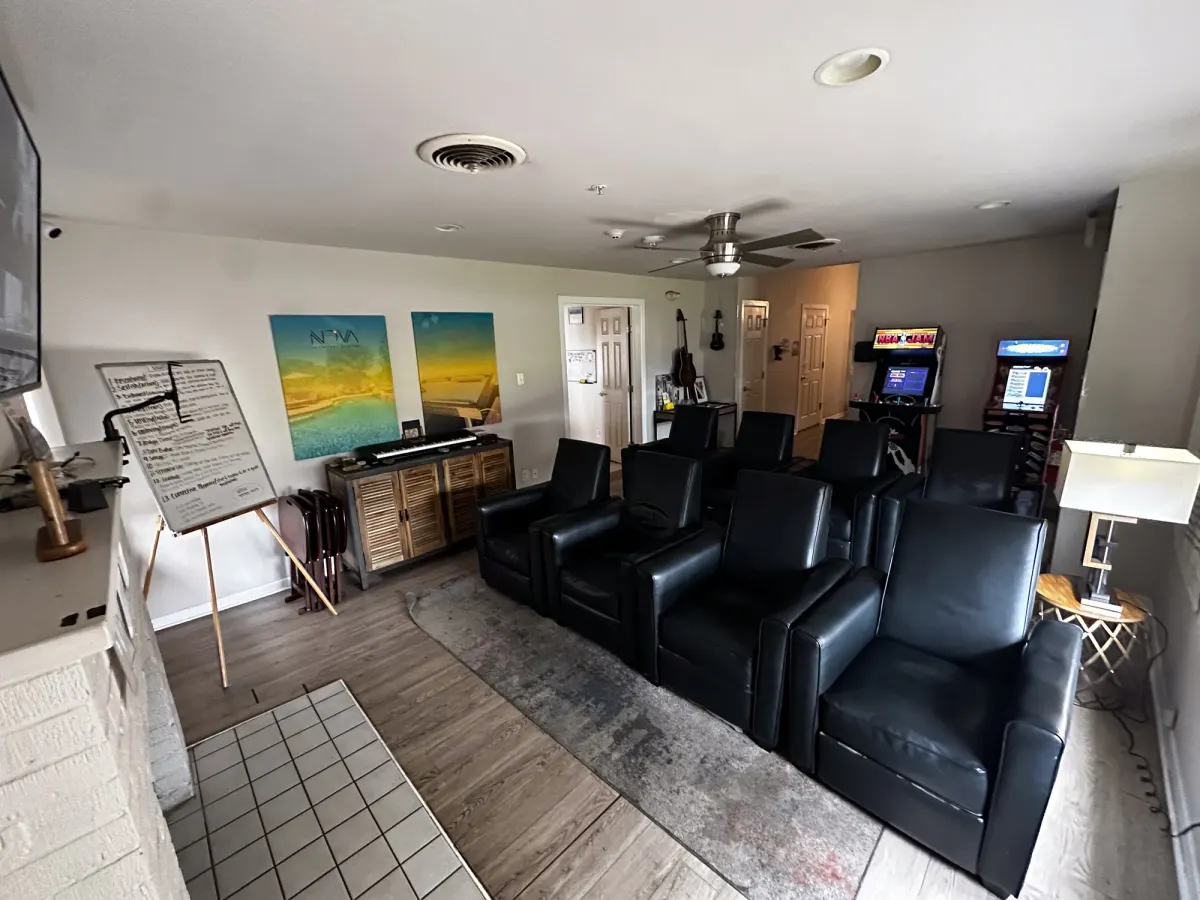
 Austin, TX
11711 N Lamar Blvd · 78753
- 15 beds
- On-site labs
- 24-hour medical staff
Drug & Alcohol Detox in Austin, TX
-
 Inpatient
 Houston, TX
1019 Ashland St · 77008
- On-site labs
- 24-hour medical staff
Drug Detox Center in Houston, TX
-
 Outpatient
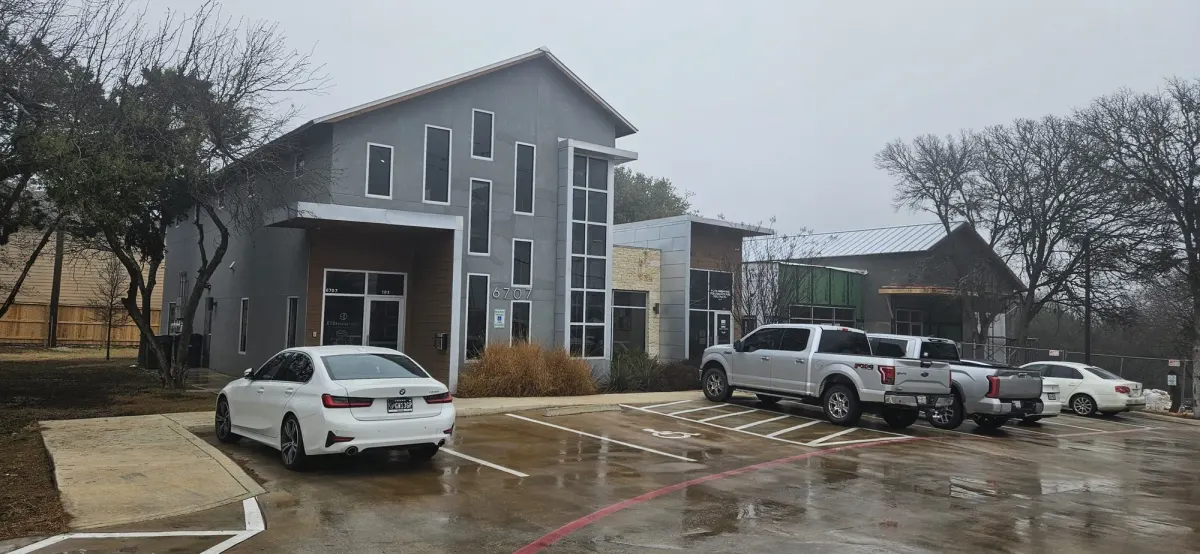
 San Antonio, TX
6707 W Hausman Rd · 78249
- Outpatient detox with scheduled medical visits
- Outpatient treatment
Outpatient Drug & Alcohol Detox in San Antonio
Illegal Opioids are Also Being Trafficked by Mail
Although the Postal Service and other shipping companies like FedEx and UPS have regulations and processes in place to ensure illegal opioids are not trafficked through the mail system, many opioids still get through.10 Fentanyl, for example, is particularly easy to ship via mail because even just a small amount of it is extremely powerful. Therefore, manufacturers can send trace amounts of it in smaller packages like envelopes, instead of larger ones.
Ready to talk to someone now? Briarwood Detox Center's admissions team is here 24/7, and every call is confidential. Call (866) 710-7710.Many Chinese sellers of illicit synthetic opioids like fentanyl and carfentanil are easy to locate, communicate with online, and will even provide tips on how to evade U.S. screenings. Many of the sellers prefer payment in Bitcoin.11
Although the Postal Service says it is aggressively working to prevent the distribution of illegal opioids from other countries via mail, their advanced data that provides information about the contents of packages doesn’t always catch everything and many illegal opioids still manage to get through.
Opioid Drug Trafficking Statistics
Heroin seizures along the U.S.-Mexico border have nearly tripled since 2009.15
- From 2012 to 2015, the U.S. Border Patrol seized more than 34,000 ounces of heroin.16
- Although Mexico accounts for only about 6 percent of the world’s opium poppy cultivation and heroin production, 39 percent of heroin identified by the DEA came from Mexico.17
- In the 2017 Fiscal Year, U.S. Border Patrol seized 953 pounds of heroin (about 949 pounds along the southwest border sectors, about 4 pounds along the northern border sectors, and 0 pounds along the coastal border sectors).18,19
- In the 2018 Fiscal Year (to date), U.S. Border Patrol seized 532 pounds of heroin.18
- In the 2017 Fiscal Year, U.S. Border Patrol seized 181 pounds of fentanyl.18
- In the 2018 Fiscal Year (to date), U.S. Border Patrol seized 332 pounds of fentanyl.18
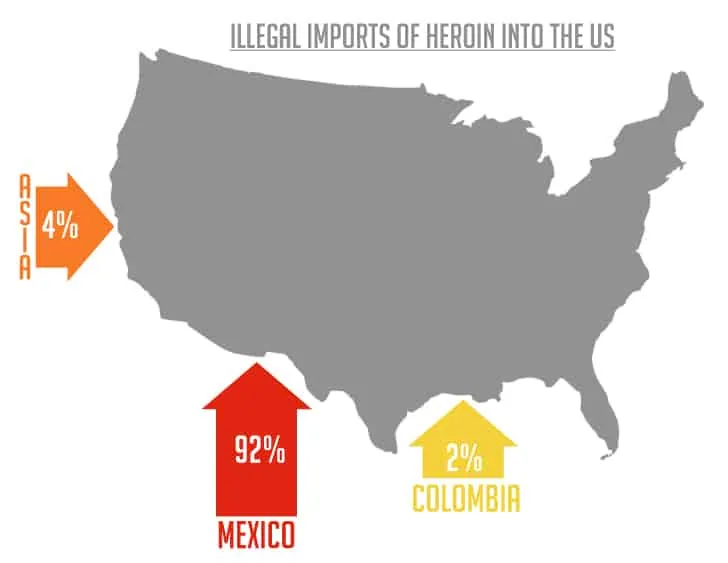
- 90 to 94 percent of heroin consumed in the United States today comes from Mexico.20
- Mexico produces about 70 tons of heroin per year.21
- Four to six percent of U.S. heroin comes from Asia, principally Afghanistan.20
- About two percent of heroin that reaches the U.S. comes from Colombia, with a very small, insignificant amount made in Guatemala.20
- On a typical day in 2017, U.S. Customs and Border Protection seized 5,863 pounds of narcotics and disrupted 222 pounds of narcotics.22
- In 2016, CBP officers seized 440 pounds of fentanyl nationally. That number grew to 984 pounds by April 2017.23
- China produces more than 90 percent of the world’s supply of fentanyl.24
Reducing the Trafficking of Illegal Opioids into the U.S.
The Drug Enforcement Administration has kept illegal drug trafficking organizations from profiting about $39 billion as a result of drug and asset seizures from 2005 to 2017.12 The U.S.-Mexican Mérida Initiative, which launched in 2007, was a partnership between the U.S. and Mexico that resulted in the capture of several top cartel leaders.13
The U.S. has also communicated with China regarding the illicit manufacturing and trafficking of synthetic opioids, and China has implemented new restrictions to curb the production and transportation of the drugs.
According to the FBI, several other programs and initiatives are aimed at reducing drug trafficking along the southwest border, as well as the economic harm and violence that comes with it.17 They include:
- Gatekeeper Project: This project assesses drug trafficking organizations that control or are involved in moving illegal drugs through America’s southwest border.
- License Plate Readers: This surveillance method reads vehicle license plates to identify and stop vehicles being used to transport illegal drugs and contraband.
- Drug Flow Attack Strategy (DFAS): This strategy is a multi-agency effort designed to disrupt the flow of drugs, money, and chemicals into the U.S. by attacking supply chains, transportation, and the financial infrastructure of drug trafficking organizations.
- Border Enforcement Security Task Force (BEST): This initiative increases information sharing between participating agencies regarding criminal organizations and violent gangs that operate along U.S. shared borders.
- Organized Crime Drug Enforcement Task Forces (OCDETF): This program, initiated in 1982, combines federal, state, and local law enforcement efforts to attack organized crime and drug trafficking.
- Concealment Trap Initiative (CTI): This initiative targets vital service providers that criminal organizations use to conceal bulk cash, illegal drugs, or other contraband.
- Southwest Border Intelligence Collection Plan (SWBICP): This plan was initiated by the DEA in 2009 and provides regional intelligence to support enforcement operations along the southwest border of the U.S.
- SWB Initiative: This initiative involves several different agencies and federal law enforcement. It attacks Mexican drug trafficking organizations that operate along the southwest border by targeting the communication systems of their control centers.
- National Southwest Border Counternarcotics Strategy: This strategy, introduced by President Obama, is intended to stem the flow of illegal drugs and their proceeds, as well as reduce drug-related crime and violence in the southwest border region.
Despite the ongoing efforts to reduce the trafficking of illegal opioids into the U.S., drug manufacturers and dealers continue to find new ways to smuggle and distribute illegal opioid drugs throughout America’s cities and communities.
Opioid Addiction: The Effects of Criminal Drug Trafficking are Far-Reaching
Many of the illegal drugs that are trafficked into the United States, such as heroin, counterfeit prescription pills, and fentanyl, carry severe physical and psychological consequences when they are abused. If you or a loved one is addicted to opioids, the risk of overdose is always present. Fortunately, it is possible to recover and live a life of sobriety. The treatment process starts with opioid detox.
Call Briarwood Detox Center today to learn more about our medical opioid detox programs for adults. We can help you overcome your addiction to heroin, prescription opioid drugs, and synthetic opioids like fentanyl. Contact us today to get started.References:
- Opioids overdose deaths rising fentanyl (nytimes.com)
- SAMHSA
- https://www.drugabuse.gov/related-topics/trends-statistics/infographics/fentanyl-other-synthetic-opioids-drug-overdose-deaths
- What are synthetic opioids fentanyl (drugpolicy.org)
- ncmedicaljournal.com
- Us opioid epidemic (cfr.org)
- DEA
- Senate investigation china mail opioids (nytimes.com)
- npr.org
- Us opioids heroin fentanyl (wbur.org)
- pbs.org
- DEA fact sheet aug 2017 (cmeoutfitters.com)
- fas.org
- Quick facts drug trafficking 2016 (ussc.gov)
- https://apps.washingtonpost.com/g/page/world/southwest-border-drug-seizures/1543/
- washingtonexaminer.com
- archives.fbi.gov
- Cbp enforcement statistics (cbp.gov)
- Usbp stats fy2017 sector profile (cbp.gov)
- https://www.wola.org/analysis/four-common-misconceptions-u-s-bound-drug-flows-mexico-central-america/
- defenseoversight.wola.org
- Typical day fy2017 (cbp.gov)
- foxnews.com
- China fentanyl schumer 1.18531808 (amny.com)
Ready to Start Your Recovery in Austin?
Briarwood Detox Center offers medically supervised detox in Austin. Explore our locations, see the facility, and verify your insurance in minutes.
See our locationsRelated Resources on Substance Abuse and Detox
Understanding the sources and patterns of drug trafficking helps contextualize the addiction crisis many face. If you or a loved one is struggling with substance use disorder, professional medical detox is the safest first step toward recovery. Explore these related topics:
- Understanding the Importance of Drug Detox in Addiction Treatment Centers — Learn why medically supervised detox is essential for safe withdrawal management.
- The Science Behind Prescription Drug Detox: What You Need to Know — Explore how prescription opioids and other medications require specialized detox protocols.
- How Drugs Change the Brain — Understand the neurological impact of substance use and the path to healing.
If you're in Austin, Houston, San Antonio, or Colorado Springs and need immediate help with drug or alcohol detox, contact Briarwood Detox Center at (866) 710-7710. Our team provides compassionate, evidence-based care tailored to your unique situation.
Related guides
In network with most major insurance
Find your plan and see what detox would cost
Most plans cover medical detox. Coverage varies by plan, so we verify it for you before you commit to anything.









Don't see your plan? We work with out-of-network benefits and offer self-pay options — (866) 710-7710
- Confidential
- Takes about 2 minutes
- No obligation to admit
- Accredited The Joint Commission
- Rated 4.7 · 182 Google reviews Flourishing Foundations Recovery, now part of Briarwood
- Admissions 24 hours a day