
Guide
Medically Assisted Detox Near You: How It Works, How Long It Takes, and How to Choose the Right Program
Joint Commission accredited · In network with most major insurance · Admissions answered 24 hours a day


Published October 18, 2025
Reviewed and updated July 29, 2026
Medically assisted (or medically supervised) detox is a short, intensive level of care that helps you stop alcohol or drugs safely while clinicians manage withdrawal and stabilize your health. Detox is the first step in treatment—not the whole journey. It focuses on medical safety and comfort (e.g., managing blood pressure, heart rate, seizure risk, dehydration, agitation, cravings), then hands you off to the next level of care (residential or outpatient rehab, medication management, therapy, peer support). Authoritative bodies stress this distinction: detox prepares you for treatment; it doesn’t replace it.
You’ll sometimes see “withdrawal management” as the clinical term. Programs range from hospital‑based units to freestanding detox centers with 24/7 nursing and a physician‑led team.
Medical Detox vs. Medication‑Assisted Treatment (MAT)
People often mix up medical detox and MAT:
Medical detox is time‑limited (days to a couple weeks), treating acute withdrawal and medical risks.
MAT is ongoing treatment using FDA‑approved medications (e.g., buprenorphine, methadone, naltrexone for opioids; several options for alcohol) combined with counseling to reduce cravings and prevent relapse. Many patients start MAT after detox. MAT saves lives and improves retention in care.
Break Free from Addiction. Detox Safely in Austin Today.
Medically Supervised Detox – Compassionate Care Starts Here.
Who Needs Medical Detox?
Detox is indicated when stopping a substance is likely to cause moderate to severe withdrawal or when medical/psychiatric risks are present. High‑risk situations include:
Alcohol dependence (especially with a history of seizures or delirium tremens)
Benzodiazepine dependence (requires structured taper to avoid seizures)
Opioid dependence with significant medical comorbidities or prior complicated withdrawals
Polysubstance use (alcohol + benzos; opioids + sedatives; etc.)
Pregnancy, older age, severe mental health symptoms, or unstable housing making home withdrawal unsafe
Clinical guidelines emphasize that severe alcohol withdrawal can be life‑threatening and is best managed with benzodiazepines as first‑line treatment under medical supervision.
Where we are
Detox centers across Texas
Three locations, each with its own admissions line and its own clinical team. Pick the one nearest you — or call and we will tell you which has a bed tonight.
-
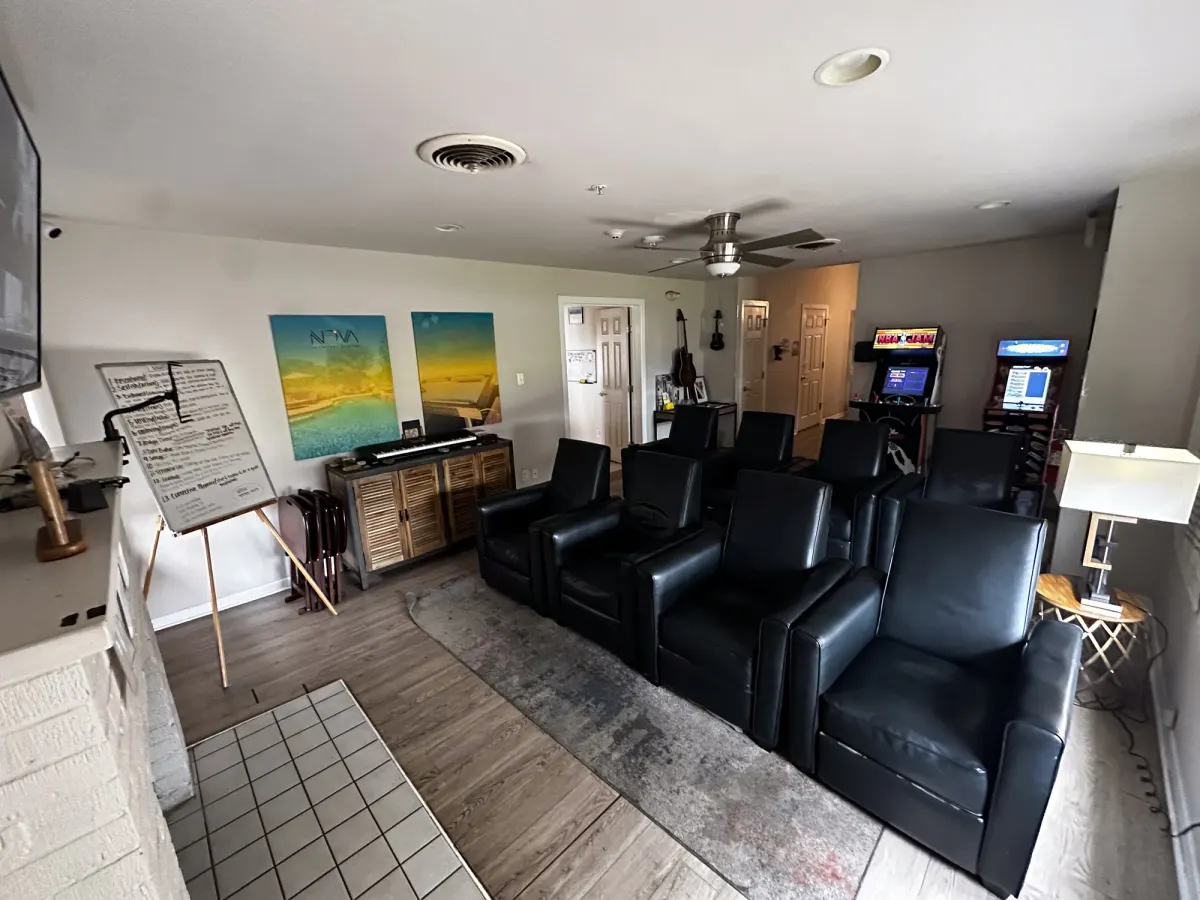 Inpatient
 Austin, TX
11711 N Lamar Blvd · 78753
- 15 beds
- On-site labs
- 24-hour medical staff
Drug & Alcohol Detox in Austin, TX
-
 Inpatient
 Houston, TX
1019 Ashland St · 77008
- On-site labs
- 24-hour medical staff
Drug Detox Center in Houston, TX
-
 Outpatient
 San Antonio, TX
6707 W Hausman Rd · 78249
- Outpatient detox with scheduled medical visits
- Outpatient treatment
Outpatient Drug & Alcohol Detox in San Antonio
What Happens in Medical Detox (Step‑by‑Step)
Intake & assessment+–
You’ll complete a comprehensive evaluation: substance use history, medical and mental health review, vitals, lab work if indicated, risk screening, and a safety plan. This helps the team match you to the correct level of withdrawal management and personalize medications and monitoring. (Clinicians often use symptom scales like CIWA‑Ar for alcohol or COWS for opioids to titrate care.)
Monitoring & comfort measures+–
Expect 24/7 nursing oversight in inpatient detox (or frequent checks in outpatient) to track vitals, oxygenation, hydration, and mental status. Staff treat common symptoms—nausea, tremors, insomnia, anxiety, blood pressure spikes—and watch for complications (e.g., seizures, delirium tremens with alcohol).
Medications+–
Medications are chosen based on the substance and symptom severity (see next section). The goal is to reduce risk and discomfort, not to simply swap one drug for another.
Stabilization & transition planning+–
The single biggest predictor of long‑term success is linkage to ongoing care. Before discharge, your team will confirm a warm handoff to residential or outpatient treatment, consider MAT if appropriate, and schedule your first appointment (often within 24–72 hours).
Break Free from Addiction. Detox Safely in Austin Today.
Medically Supervised Detox – Compassionate Care Starts Here.
Medications Used in Detox (By Substance)
Medication choices are individualized by a licensed prescriber based on your health status, substances, and goals.
Alcohol+–
Benzodiazepines (e.g., lorazepam, diazepam, chlordiazepoxide) are first‑line to prevent seizures and delirium tremens; dosing can be symptom‑triggered or fixed, guided by validated scales. Adjuncts (e.g., thiamine, fluids, electrolytes) address deficiencies and dehydration; other agents may be used in specific scenarios.
Opioids (heroin, fentanyl, pain pills)+–
Buprenorphine (including long‑acting options) and methadone ease withdrawal and cravings; lofexidine (or clonidine) may relieve symptoms; naltrexone (oral or extended‑release injection) is typically started after detox to avoid precipitated withdrawal. MAT has strong evidence for reducing overdose risk and improving retention.
Benzodiazepines+–
Usually managed with a gradual taper under medical supervision; abrupt cessation can trigger seizures and severe rebound anxiety/insomnia. (Often handled in inpatient settings when high risk.)
Stimulants (methamphetamine, cocaine)+–
No FDA‑approved anti‑craving medication yet; detox focuses on sleep restoration, nutrition, mood stabilization, and safety monitoring. Programs may treat co‑occurring depression/anxiety and provide contingency management and therapy after detox.
How Long Does Detox Take?
Detox length depends on what you used, how much/how long, overall health, and co‑occurring conditions. A common range is 3–10 days, with many inpatient programs averaging ~5–7 days for alcohol or opioids—though some tapers or complex cases may require longer.
Some centers describe 3‑, 5‑, or 7‑day stays for straightforward cases; others offer 10–14–30‑day medical detox tracks for complicated or polysubstance withdrawals. The right duration is the one that achieves medical stability and safe handoff to ongoing care.
Break Free from Addiction. Detox Safely in Austin Today.
Medically Supervised Detox – Compassionate Care Starts Here.
Inpatient vs. Outpatient Detox
Inpatient (hospital or residential medical unit): best for moderate‑to‑severe withdrawal risk, polysubstance use, medical complexity, or limited home support.
Outpatient: possible for mild withdrawal risk with strong supports, daily check‑ins, and reliable transport. Clinicians decide using established criteria (e.g., ASAM).
Safety: Why “Detoxing at Home” Can Be Dangerous
Alcohol and benzodiazepine withdrawal can turn life‑threatening (seizures, delirium tremens). Even opioid withdrawal—while rarely fatal—can cause severe dehydration, blood pressure fluctuations, and relapse risk. For many, medical supervision is the safest choice. When in doubt, get professional guidance.
Cost, Insurance & Free/Low‑Cost Options
Costs vary by setting (hospital vs. residential), length of stay, and your insurance. Many insurers cover detox. If you’re uninsured or under‑insured, look for state‑funded or sliding‑scale programs and use national locators to filter by payment options.
Where to start: Use FindTreatment.gov to search by ZIP, accepted insurance, medications offered, and more. It’s free, confidential, and up to date.
After Detox: Your Next Steps Matter Most
Detox is the starting line. Sustained recovery typically involves one or more of the following immediately after discharge:
Residential or outpatient treatment (therapy, skills, relapse prevention)
MAT when indicated (opioids/alcohol)
Peer support (AA/NA/SMART) and recovery coaching
Health follow‑up (primary care, psychiatry, nutrition, sleep)
Research consistently shows that matching you quickly to the right level of ongoing care improves outcomes. Use your momentum from detox to engage support early.
Finding Local Options (Practical Steps)
To generate a focused list, you can literally type, medically assisted detox near me, into a search engine, then vet the results with the checklist above. Also search FindTreatment.gov by ZIP code and filter for detox/withdrawal management and medications offered (e.g., buprenorphine, methadone, naltrexone). Consider calling two or three programs to compare availability, insurance, and transition plans. Some centers do offer same‑day admission depending on capacity.
FAQ — People Also Ask–Style Questions (10)
What is the difference between medical detox and rehab?+–
Detox manages acute withdrawal and stabilizes your health; rehab provides therapy, skill‑building, and long‑term relapse prevention. Detox is the first step; treatment must continue afterward.
Is medical detox the same as MAT?+–
No. Medical detox is short‑term stabilization; MAT is ongoing use of FDA‑approved medications (plus counseling) to reduce cravings and prevent relapse. Many people start MAT after detox.
How long does medical detox take?+–
Often 3–10 days, with many programs averaging ~5–7 days depending on the substance, duration/amount of use, and your health. Complex cases may take longer.
What medications are used during alcohol detox?+–
Benzodiazepines are first‑line to prevent seizures and delirium tremens; clinicians may add vitamins (e.g., thiamine) and other supportive meds as needed.
What medications are used during opioid detox?+–
Buprenorphine or methadone ease withdrawal; lofexidine or clonidine can help symptoms. Naltrexone is generally started after detox.
Can I detox at home?+–
Self‑detox can be dangerous, especially for alcohol or benzodiazepines (seizure/DT risk). Ask a clinician which setting (inpatient vs. outpatient) is safe for you.
Does insurance cover medical detox?+–
Often yes. Programs will verify benefits; if uninsured, search state‑funded and low‑cost options and use SAMHSA’s locator to filter by payment type.
Is there medication for stimulant detox (meth, cocaine)?+–
There’s no FDA‑approved anti‑craving medication for stimulants yet; detox is supportive. Post‑detox therapy and contingency management help.
How do I find a reputable medical detox program near me?+–
Search FindTreatment.gov, check licensing/accreditation, ensure 24/7 nursing, evidence‑based protocols, and a warm handoff to ongoing care.
Can I get into detox today?+–
Capacity varies by center and time of day; some programs offer same‑day admissions. Call ahead, verify insurance, and confirm transport.
Related guides



In network with most major insurance
Find your plan and see what detox would cost
Most plans cover medical detox. Coverage varies by plan, so we verify it for you before you commit to anything.

















Don't see your plan? We work with out-of-network benefits and offer self-pay options — (866) 710-7710
- Confidential
- Takes about 2 minutes
- No obligation to admit
- Accredited The Joint Commission
- Rated 4.7 · 182 Google reviews Flourishing Foundations Recovery, now part of Briarwood
- Admissions 24 hours a day